1. What is a credit card?
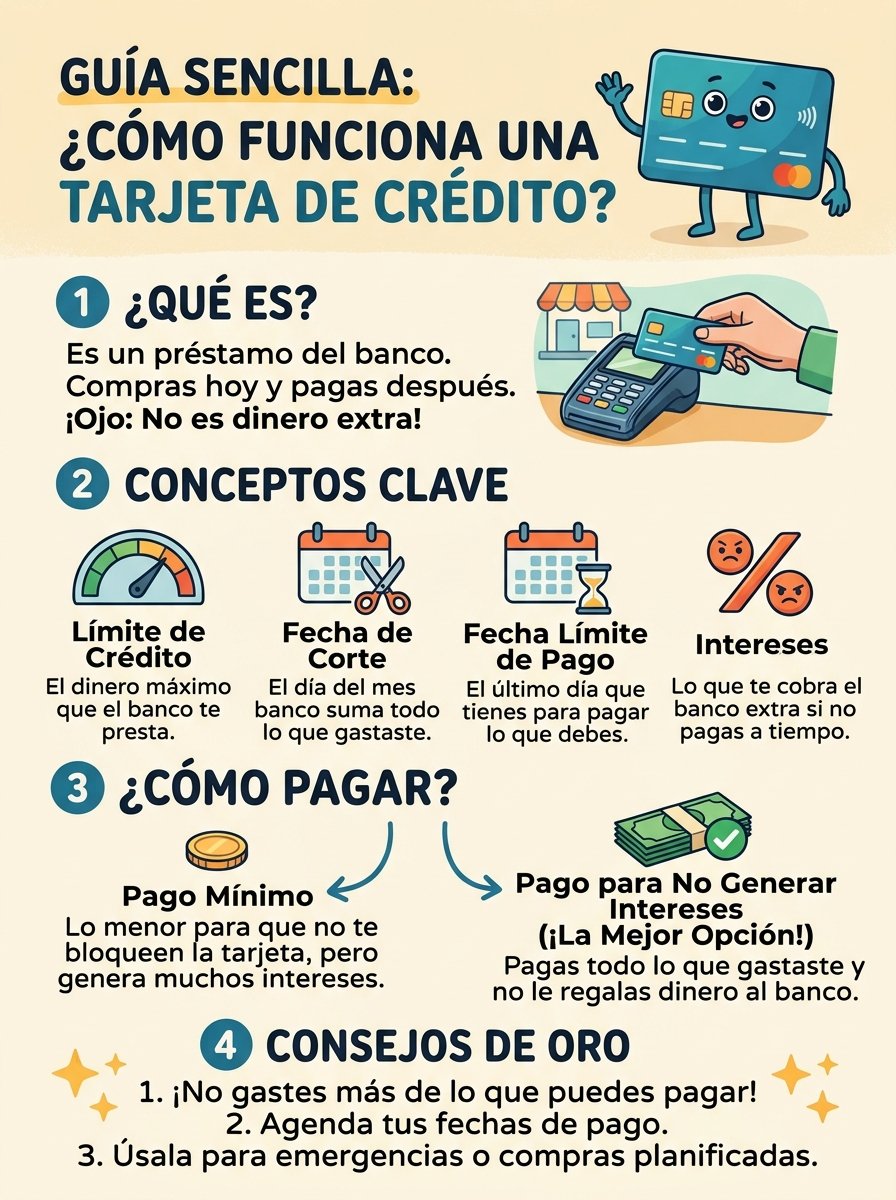
It is not your own money. It is money lent to you by a bank up to an approved limit. Every purchase you make with the card is debt you must repay later.
2. How it works in practice
- The bank gives you a credit limit (e.g., $10,000).
- You pay merchants with the card.
- The bank pays the merchant, and you owe the bank.
- Each month you receive a statement showing:
- Statement closing date: the day the bank calculates what you owe.
- Payment due date: the last day to pay.
- Statement balance / “pay to avoid interest”: the total purchases for the period.
- Minimum payment: the least the bank accepts; if you pay only this, the rest earns interest.
- If you pay the full balance before the due date, you pay no interest.
- If you pay only the minimum or pay late, you are charged interest and possibly fees.
3. Key terms
- Statement balance: the debt for the period.
- Minimum payment: avoids delinquency but does not avoid interest.
- Interest: the cost of borrowing; it can be very high.
- APR / CAT-type cost: total annual cost, including interest and fees.
- Interest-free installments (MSI): promotional payment plans; read the terms.
- Cash advance: withdrawing cash with the card is usually expensive and starts earning interest immediately.
- Credit history: the record of how you pay; it affects future loans.
4. Simple example
You buy $5,000 with your card.
- If you pay $5,000 before the due date: you pay no interest.
- If you pay only the minimum, say $500: the remaining $4,500 starts earning interest, and the debt can grow quickly.
5. Pros
- Short-term financing with no interest if you pay the full balance on time.
- Security: fraud disputes are usually easier than with a debit card.
- Benefits: points, cashback, promotions, and interest-free installment plans.
- Builds credit history for a mortgage, car loan, or future credit.
- Emergencies: can help you cover an urgent expense.
6. Cons
- Risk of overspending and debt if you don’t control your spending.
- Very high interest if you pay only the minimum.
- Fees: annual fee, cash-advance fee, late-payment fee.
- Temptation to spend more than you can repay.
- Affects your credit report if you pay late or default.
- Fraud or theft: protection usually exists, but you must report it.
7. Golden rules
- Use it only for what you can repay.
- Pay the full balance before the due date.
- Avoid paying only the minimum.
- Do not take cash advances except in an emergency.
- Review your statement every month.
- Do not keep too many cards if you cannot manage them.
- If you use interest-free installments, make sure you can cover each payment.
Summary: A credit card is a useful tool if you use it as a payment method and pay on time. It becomes expensive and risky if you use it as permanent borrowing.